


How does a Work and Holiday Maker pay tax in Australia?
If you’re coming to Australia to work on a Work and Holiday visa, it’s important to understand how you’ll be taxed based on your income during the financial year. In this guide, we break it down clearly.
When am I considered a Work and Holiday Maker?
You’re considered a Work and Holiday Maker if you hold one of the following visa subclasses:
- 417 – Working Holiday.
- 462 – Work and Holiday.
If you moved onto a bridging visa (for example, the COVID visa or another bridging visa) after previously holding a Work and Holiday visa, you’ll generally still be taxed as a WHM (Working Holiday Maker).
Confirming your status (WHM vs tax resident) is the first step to calculating your tax correctly and avoiding surprises when lodging your Tax Return.
What tax do I have to pay?
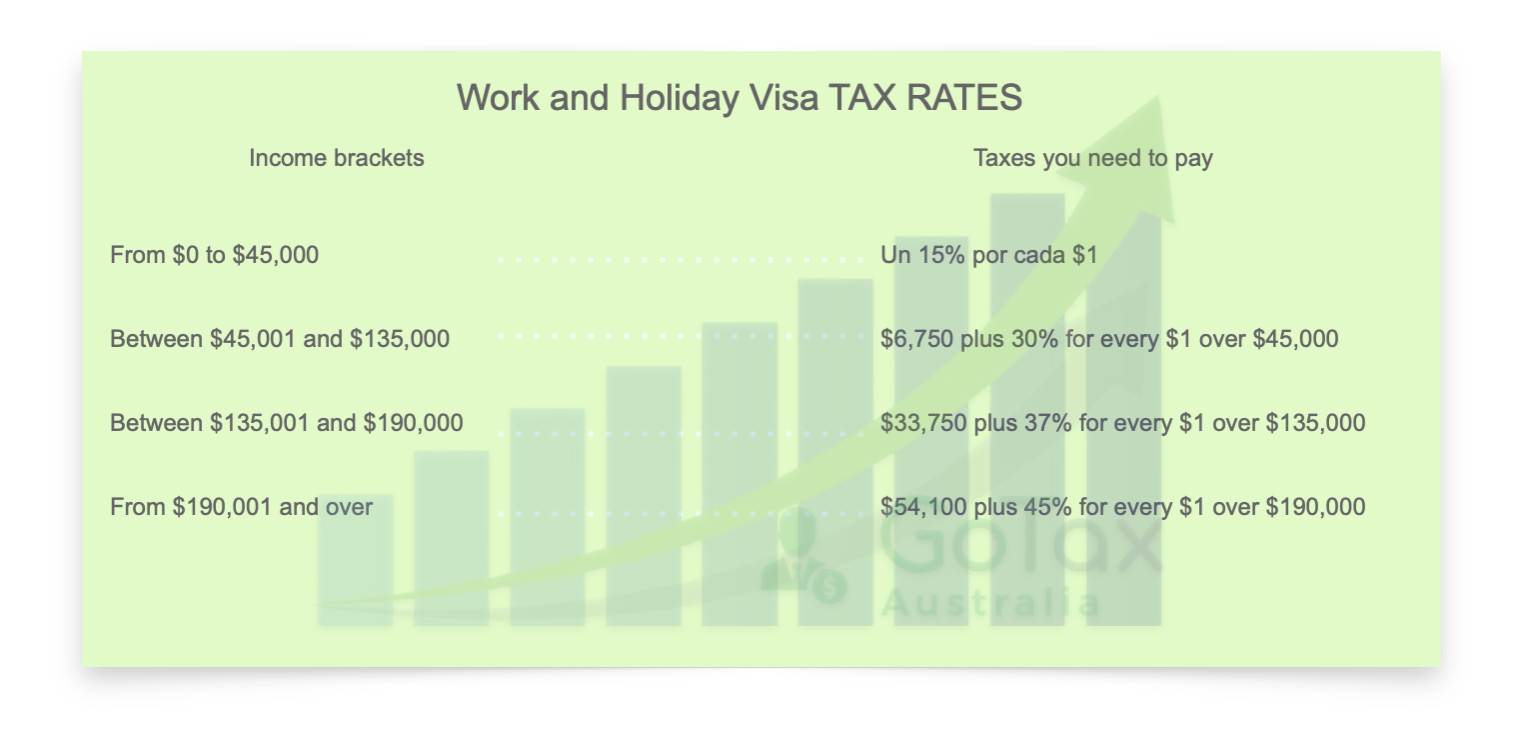
Income brackets and tax rates for Work and Holiday Makers
As shown in the table, if over the full financial year (1 July to 30 June) you earn less than $45,000, you’ll pay 15% on your total taxable income. If you go over $45,000, you’ll pay 15% on the first $45,000 ($6,750) plus 30% on every dollar above that threshold. The same logic applies across each income range, as you can see in the table.
IMPORTANT: Non-Discrimination Article (NDA) countries
If you are from a country covered by a Non-Discrimination Article (NDA), you may be treated as an Australian resident for tax purposes instead of a Work and Holiday Maker. The countries currently covered include:
- Chile
- Finland
- Germany
- Israel
- Japan
- Norway
- Turkey
- United Kingdom
You may be taxed as a resident rather than as a WHM. Here’s the step-by-step guide.
Before lodging your Tax Return, confirm your tax status and apply the correct tax brackets. You’ll avoid debts or incorrect calculations.
More resources for residents and Work and Holiday.
Final tip
If you’re in Australia on a Work and Holiday visa, understanding your tax obligations is essential. Make sure you meet all requirements and calculate your tax correctly to avoid potential debts when lodging your Tax Return. That way, you’ll have a smoother experience—with no unpleasant surprises.
If you have any questions, feel free to contact us.